Souss-Massa: The National Park, and the Trips That Only Sound Like It
Updated September 24, 2026 · 7 min read
Two quite different places are sold under one heading here, and the listings do not always make the difference obvious.
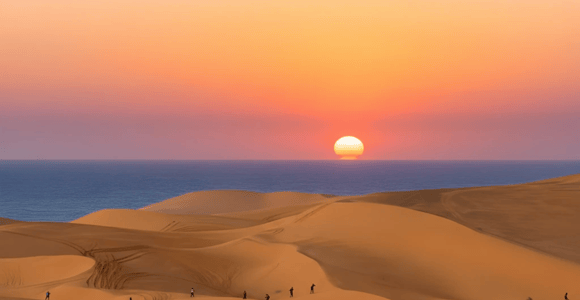
One is Souss-Massa National Park: 33,800 hectares of coast, dune and river mouth created in 1991, running south from the edge of Agadir towards Sidi Ifni. The other is Crocoparc, a crocodile park on the way out of the city, which is a good afternoon and is not a national park.
Our Souss-Massa category holds 20 offers, from €10, median €21.76. Read them one by one and the split becomes clear: most are Crocoparc tickets, goats-in-trees combinations and camel rides along the river at the city’s edge. Two of the twenty actually drive into the park. One is the half-day trip described below; the other is a full-day 4x4 safari at €37.61 that takes in the Souss-Massa side of the region.
That is not a complaint about the operators — a camel ride by the Souss river genuinely does show you flamingos. It just means the category name is not the itinerary, and if the park is what you want, you have to pick deliberately.
What is inside the park
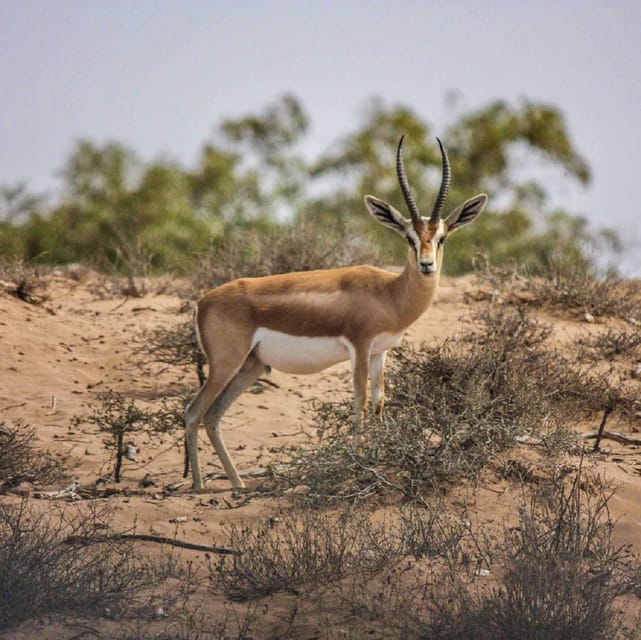
The park runs captive-breeding programmes for four threatened North African ungulates — scimitar oryx, addax, dama gazelle and dorcas gazelle — kept in separate fenced enclosures, with reintroduction work going back to 1995. The North African ostrich, extinct north of the Sahara, is being brought back the same way.
Say the consequence plainly, because the word “safari” gets used a lot: the antelopes you photograph here are behind fences. That is what restoring a Saharan fauna looks like in practice, and it is the honest reason the park exists. If your picture of a wildlife day is animals moving freely across open country, this is not that day.
What is wild here are the birds. The park holds three of the four Moroccan colonies of the northern bald ibis, which we covered under animal experiences; the operator of the half-day trip counts 250 bird species, 30 mammals and 35 amphibians and reptiles across the protected area. Between the estuaries, the dunes and the scrub, this is one of the richest stretches of bird country on the Moroccan Atlantic coast.
The one real half-day, as its own listing sets it out
The park trip with the most reviews runs at €65 and has 23 of them. Its itinerary is unusually specific, and the details matter more than the price:
- Hotel pickup, departure around 8.30am, roughly 45 minutes’ drive south.
- The park museum first, then three stops of about an hour each inside the protected area.
- Back at the hotel around 2pm.
- The park entrance ticket is included; food and drink are not. Bring water — there is nowhere to buy it.
- In some parts of the park you are not allowed to leave the vehicle. That is in the operator’s own notes, and it is a conservation rule rather than a formality.
- Under-17s must be accompanied by an adult. Pets and smoking are not allowed.
- The operator states the trip is not wheelchair accessible. If mobility is a question for you, ask the operator directly and get the answer before you pay — this is one of the few claims where being wrong costs someone their day rather than their money.
Drop-off is offered in Agadir, in Taghazout, or at the commercial port, which makes this one of the few inland trips that works for a cruise day.
The version that costs nothing
The Oued Souss, the river mouth at the southern edge of Agadir, is not inside the national park and holds much of the same birdlife: flamingos through the winter, spoonbills, waders on the mud at low water. You can walk to the south bank, and the light is best in the first hours after sunrise.
The cheap camel rides in this category — €16.23 to €20.52 — are essentially a guided version of that walk, along the river and through the eucalyptus. If what you want is flamingos and a quiet hour, they are the better value than any park day, and we compared them with the alternatives in the horse riding article.
When to come
November to March is the season. The winter migrants are in, the flamingos are on the estuaries, and the temperature inland is pleasant rather than punishing.
Early morning, in any month. Animals move at the edges of the day and sit out the middle of it. A trip that leaves at 8.30am is built around that, and the one that leaves at eleven is built around breakfast.
July and August are the weakest weeks: hot, still, and the fenced herds spend the day in shade where you cannot see them.
Getting there without a tour
The park entrances are south of the city towards Massa and Sidi R’bat, between roughly one and two hours away depending on which part you aim for. Public transport does not serve them in any way a visitor can use, and a taxi that waits all day costs more than most people expect.
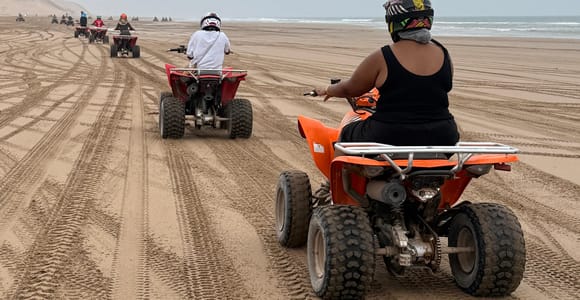
So this is one of the trips where the arithmetic genuinely favours a car, especially for two or more people — the same vehicle also reaches Taroudant, Tiznit and the coast road at Legzira. If that is your plan, it is worth comparing rental cars for Agadir rather than taking the desk price at the airport. Stay on the sealed roads: most rental contracts exclude unpaved tracks, and the piste into the dunes is precisely where that clause bites.
Who should book this
Anyone who owns binoculars: the half-day park trip, in winter, and take the earliest departure offered.
Families who have already done Crocoparc: the park is quieter, slower and has real animals in real habitat rather than an attraction built around one species. Expect a car-bound morning rather than a playground.
A free afternoon and no budget for another excursion: the Oued Souss on foot, or a camel hour along it.
Anyone expecting a Kenyan game drive: book something else. The honest version of this park is fences, birds and silence — and for the people who want that, there is nothing else like it within an hour of the coast.